Ads don't increase revenue.
The right marketing strategy does.

AdsSEOWebsite designBrandingEmail / SMSAI automationCustom data dashboards

Tutu is a high performance marketing agency that partners with founders or marketing departments on the online revenue system of a business: Ads, SEO, Website Design, Branding, AI automation, Email/SMS, and Custom data dashboards that drive decision making.

Over a decadeOf growing revenue online, not just running ads
$2k to $200kPer client in managed ad spend per month
9+ industriesDriving results across apparel, CPG, home services, real estate, SaaS, hospitality and more
30+ clientsAcross the decade, helping brands and businesses across North America
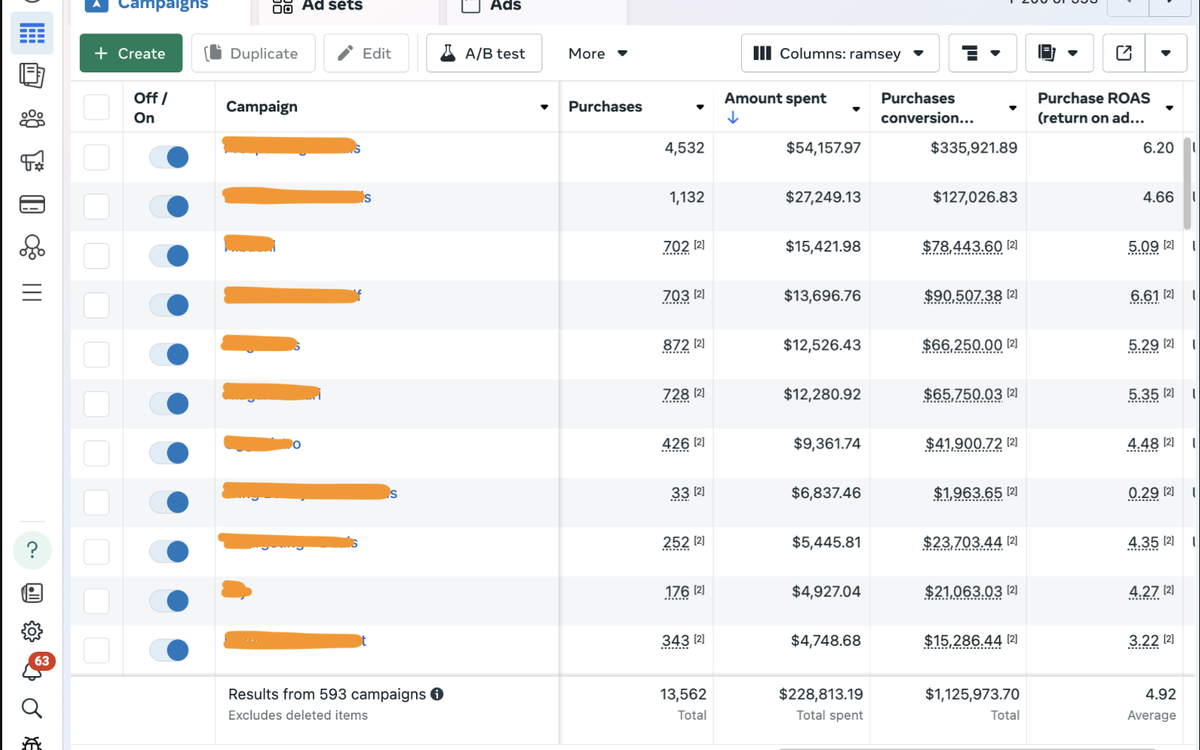
Apparel ecom
Ads platform campaign totals showing purchase return on ad spend
4.92Purchase ROAS
$1.12MConversion value
4.92xROAS
Return on ad spend across $228K of spend and 23 campaigns.

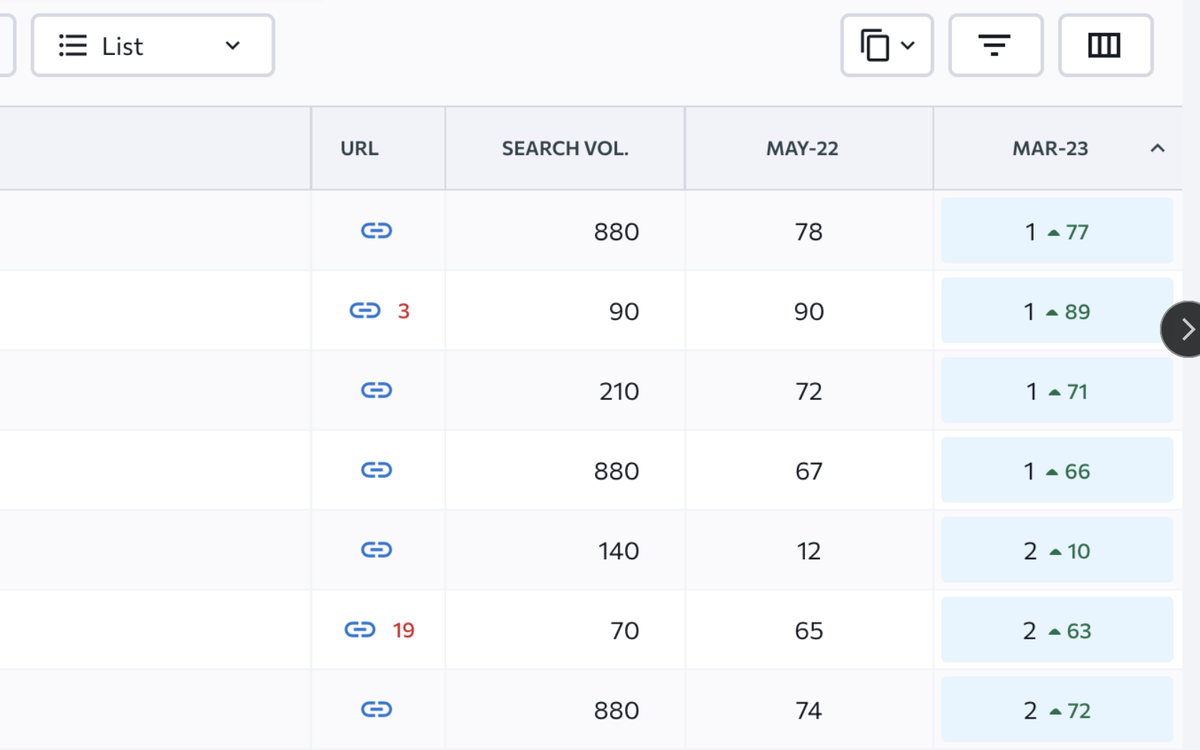
Recruitment agency
Keyword rank tracker showing positions rising to number one
1Mar-23
90May-22
#1Google ranking

Number one position Google ranking, up from 90th.

Retail ecom
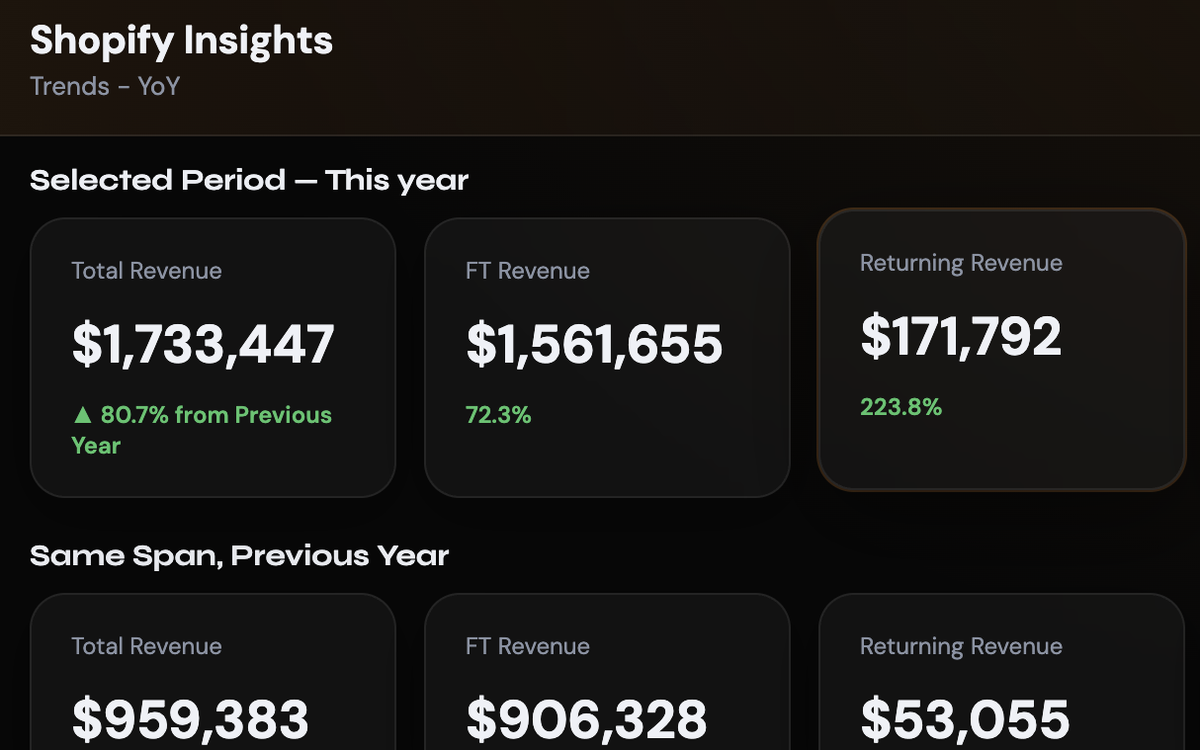
Store revenue dashboard comparing this year against last year
$1,733,447This year
80.7%Year over year
80.7%Revenue growth

Revenue year over year, $959K up to $1.73M.

Everyone has an opinion on increasing sales with ads.
And when it doesn't work, few can tell you why.

LAST 90 DAYSROAS down 14%▼ nobody can say why
Meta worked last year. It just stopped.
Same ads, same budget. Half the sales.
Traffic is up. Revenue is not.
ROAS dropped, so the ads must be broken.
We cut the budget and it got worse.
Two campaigns, same setup, opposite results.
Cart adds are fine. Checkouts are not.
Nobody can tell me what actually changed.
YEAR ON YEARTraffic down 18%▼ noticed in month four
The reports look great. Sales do not.
We are told to test. Test what, exactly?
Three agencies, three different answers.
We fixed the ads. The problem moved.
It worked for six weeks, then died.
Which number am I even supposed to watch?
SAME BUDGETLeads down 20%▼ same targeting
Running ads is the tip of the iceberg.
5%
How most brands think advertising works

Generic graphic with AI or upload previously made content into a platform, and hope for the best.

95%
What we actually do to drive revenue and sales growth
Market & competitor research
Offer & positioning strategy
Intentional copywriting
High converting website design
Correct tracking setup
Creative design testing
Budget optimizations
AI automation
Reporting that drives decisions
Email/SMS funnels

You might have been told your ads are the problem.
Usually, they are not.

AI can read your ad account and your website now, and it will answer anything you ask. What it cannot do is tell you which question to ask, or connect a number in one place to its cause in another. Information got cheap. Knowing what to dissect became more important than ever before.

Your offer is not positioned

Strong product, wrong promise. The market scrolls straight past it, and no amount of budget or ad spend fixes a message that does not land with the customer.

We askWhat is your buyer doing instead right now, and why would they stop?

Your website leaks

Traffic arrives but does not convert into a sale or a lead. You pay for every one of those clicks. The ads do their job. The page does not.

We askWhere is traffic falling off, and what did the ad promise that the page does not?

Your funnel stops at the sale

No email sequences, no AI automation, no second purchase. Only about 3% of your market is ready to buy today. The other 97% buy later, from whoever is still in front of them.

We askWhat is a repeat customer worth, and what would increase purchase frequency?

Seven key services under one roof.

Tap any service to see what it includes

01Advertising / Paid Media
02Website design & development
03SEO and AI search
04Email & SMS
05AI automation
06Logos & Branding
07Custom consultation

Paid media on every channel that can buy you a customer.

Google and YouTube for the demand that already exists. Meta, TikTok, Pinterest and LinkedIn for the demand you have to create. One team across all of it, so budget moves to whatever is working this month instead of sitting where it got assigned in January.

Search & Performance MaxAdvantage+ ShoppingLead ads & CRM sync
// WHAT WE ACTUALLY RUNSEVEN PLATFORMS
SEARCH & SHOPPING
  • Match type discipline
  • Performance Max, supervised
  • Shopping and Merchant feeds
  • YouTube and Demand Gen
SOCIAL & DISCOVERY
  • Advantage+ Shopping, fed properly
  • Prospecting and retargeting
  • Catalog and dynamic product ads
  • TikTok, Pinterest, LinkedIn
GoogleYouTubeFacebookInstagramTikTokPinterestLinkedIn

Website design and development, on Shopify and WordPress.

Built to sell, not just to look good. No templates and no page builder lock in. Every page is treated as a conversion flow: the hierarchy, where the offer sits, what proof shows up and how fast it loads. Looking good is the baseline. What we get graded on is whether the traffic you already pay for turns into revenue.

Shopify buildsWordPress buildsConversion rate optimizationSpeed & Core Web VitalsTracking & analytics
// TWO PLATFORMS, ONE STANDARDCONVERSION RATE, SAME TRAFFIC
ShopifyEcommerce builds Product and collection templates, checkout, app stack and a feed that Google and Meta can actually read.
WordPressLead generation builds Custom themes without page builder bloat, forms wired straight into your CRM, content that ranks.
Before rebuild
1.4%
After rebuild
3.8%

SEO that gets judged on revenue, not on rankings.

Rankings are the mechanism, revenue is the point. Technical foundations come first, because content published on a broken site never compounds. Then the topical map, category and product pages that can actually rank, local and map pack where the business needs it, and structure that gets you cited inside AI answers instead of just listed underneath them.

Technical SEOContent & topical clustersEcommerce & category SEOLocal & map packAI answer optimization
// THE ORDER WE DO IT INFOUNDATIONS FIRST
01  TechnicalCrawl, speed, schema, indexation
02  Topical mapPillar pages plus supporting clusters
03  EcommerceCategory, product and feed optimization
04  AI answersCited by the answer, not ranked below it

Email and SMS that earn revenue instead of discounting it.

Flows first, campaigns second. Welcome, browse and cart abandonment, post purchase and winback carry the revenue quietly in the background, while campaigns carry the calendar. Segmented, so your best customers are not being sent the same message as someone who has never bought.

Lifecycle flowsCampaign calendarSegmentationDeliverability
// WHERE EMAIL REVENUE COMES FROMFLOWS DO THE QUIET WORK
Flows
68%
Campaigns
32%
OF TOTAL REVENUE24%
LIST ENGAGED41%
SENT BY HAND0

AI automation that removes the work nobody should be doing by hand.

Reporting, lead routing, feed maintenance, creative tagging. The repetitive work that quietly eats a team's week. We build it once, wire it into the tools you already use, and you get the hours back. The point is never the technology, it is what stops being manual.

Reporting automationLead routing & CRM syncFeed & catalog automationInternal tooling
// WORK WE HAVE TAKEN OFF PEOPLEHOURS BACK, PER MONTH
Monthly client reporting14 hrs
Lead routing and CRM sync9 hrs
Product feed maintenance11 hrs
Creative tagging and QA6 hrs

A branding kit everything else gets built from.

Most brands have a logo and a colour, and then every ad, email and page quietly invents its own rules. The kit settles it: the logo and its lockups, the colour palette and where each one is allowed to go, the type, and how the brand actually sounds. All of it written into one brand bible your team and ours both work from.

Logo & lockupsColour paletteTypographyTone of voiceBrand bible
// WHAT THE KIT SETTLESONE SOURCE
01  IdentityLogo, lockups, clear space
02  ColourPalette and where each one goes
03  TypeFamilies, scale and weights
04  VoiceHow the brand sounds, written down
05  Brand bibleAll of it in one document

AI made building things cheap. Deciding what is worth building did not get cheaper.

Anyone can spin up the dashboard, the landing page, the campaign. That part stopped being hard. The hard part is knowing which one of them actually moves revenue in your business, what order to do them in, and what you should change on Monday because of it. This is us on your side of the table, telling you where to spend next and what to leave alone.
Where to spend nextWhat to fix firstSecond opinion on a planOngoing advisory
// WHAT WE LOOK AT FIRSTPER CLIENT
Hoodies
9 days
Joggers
17 days
Tees
44 days
Outerwear
61 days
BLENDED REVENUE$212k
CONVERSION3.1%
AT RISK2 lines
Channels we manage
Instagram Facebook Google TikTok Pinterest LinkedIn SEO Email Shopify websites WordPress websites Instagram Facebook Google TikTok Pinterest LinkedIn SEO Email Shopify websites WordPress websites

Fewer words.
More screenshots.

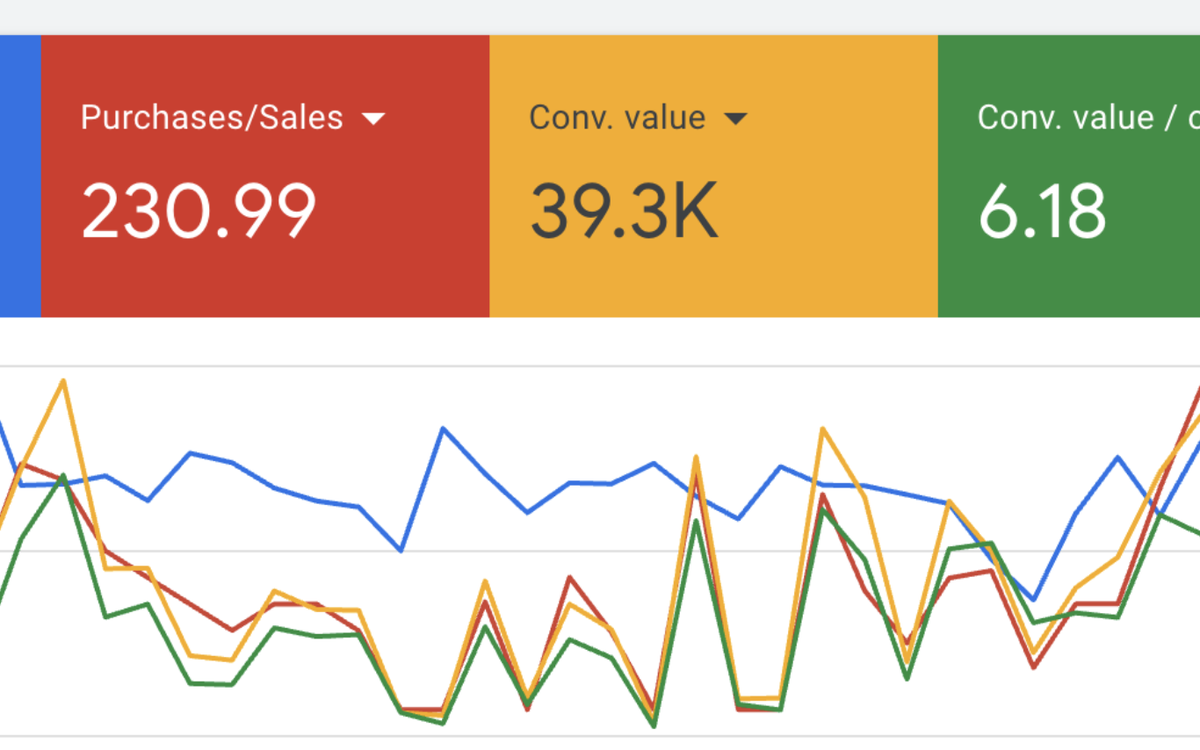
DTC ecom
Search ads overview showing conversion value and return on ad spend
6.18xROAS

Return on ad spend on Google, $39.3K in conversion value.

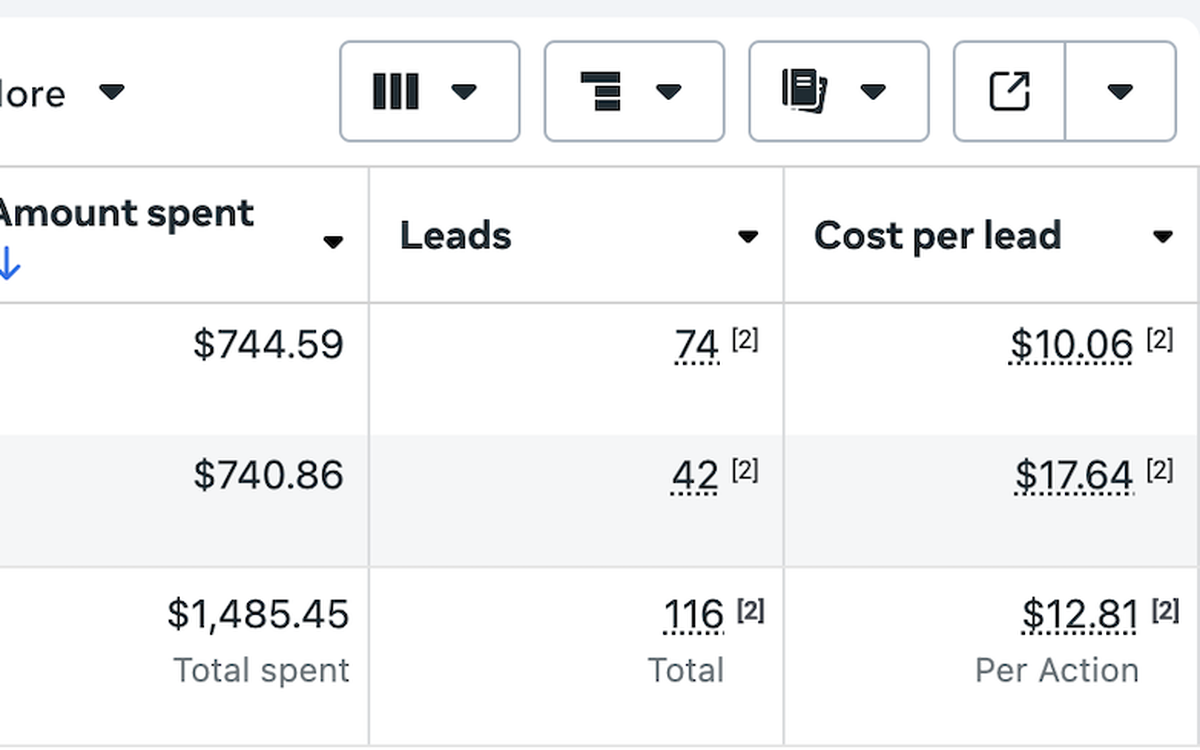
Lead generation
Ads platform campaign totals showing leads and cost per lead
$12.81Cost per lead
116Leads
$12.81Cost per lead

Cost per lead on high ticket, 116 leads from $1,485 in spend.

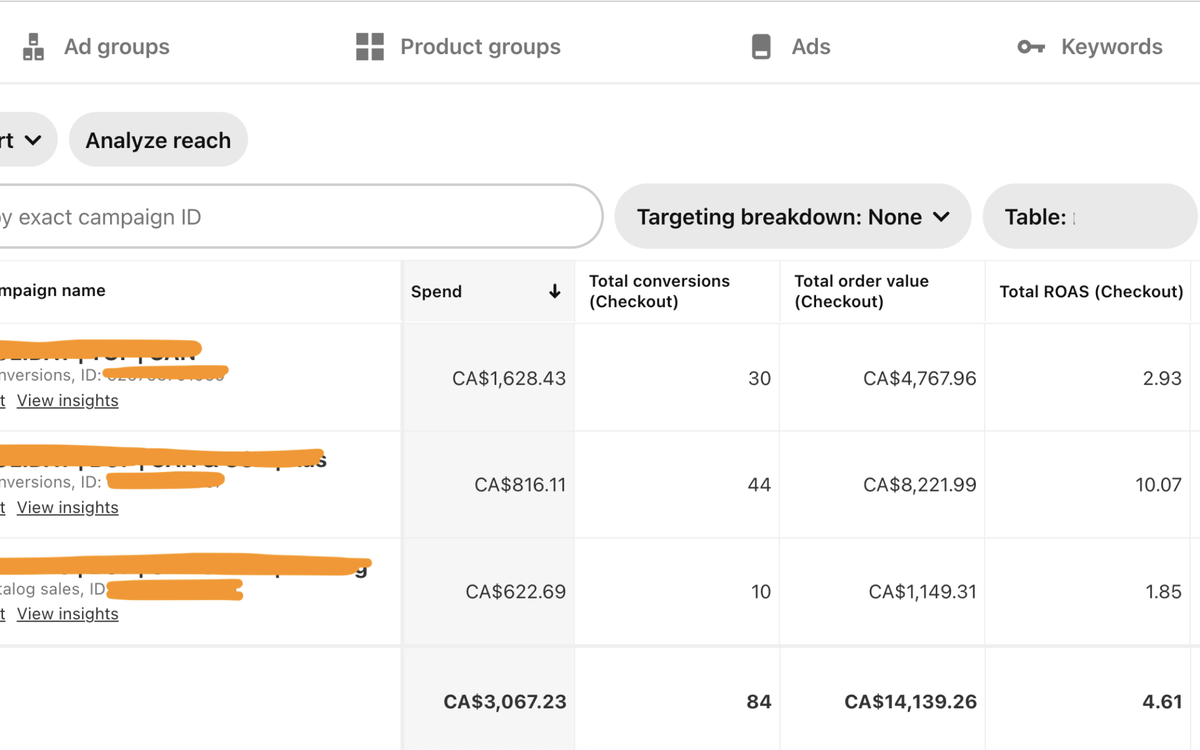
Ecom brand
Campaign table showing spend, order value and return on ad spend
4.61Total ROAS
CA$14,139Order value
4.61xROAS

Return on ad spend on Pinterest, checkout attributed.

Your brand next.

Ask us to assess the whole system, or the one part you already know is broken.

Request free audit

Tell us what is not working.

We will tell you what is actually holding growth back, whether or not the partnership goes ahead. If we are not the right fit, you will hear it on the call.

A strategist on the call, not a salesperson
Straight answers, including the ones you will not like
Minimum engagement is $2,000 per platform